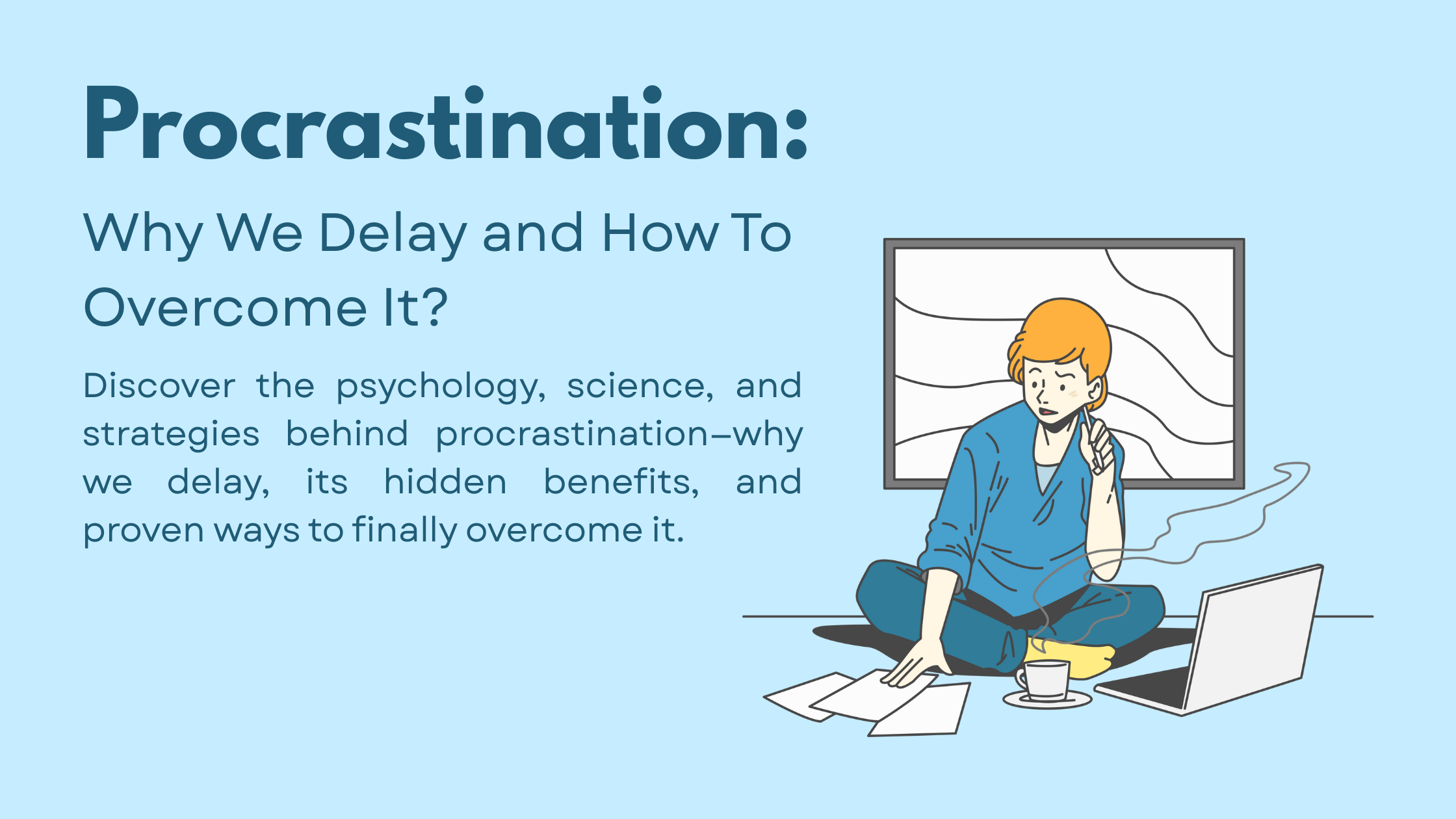
You decided to start creating content. You start by checking for a niche, then related keywords, and then how to create a perfect video, the best video editing apps, how to make a perfect thumbnail, and so on. By the time you realise, you’re already stuck in a loop of overplanning. That means you have already experienced a Mental Masturbation.
Let’s look at this formal definition.
What Is Mental Masturbation?
Mental masturbation is the habit of overthinking, overplanning, over-researching, and over-analysing to a point where your brain feels productive, but your life doesn’t actually move forward.
Simply put, it’s like scrolling endlessly—you’re stimulating your mind without creating anything meaningful.
It shows up as:
– Watching success videos but never building a skill
– Planning your dream business for months, but not launching a single offer
– Reading books on fitness instead of doing 20 pushups
– Making perfect to-do lists but completing none
– Imagining your future 10 years ahead instead of improving your today
And the worst part? It feels good. It feels productive.
Mental masturbation is the ultimate illusion of progress.
You’re convincing yourself that you’re being productive, but it hasn’t moved the needle
But we’ve got solutions that are practical and easy to implement.
Why Does Mental Masturbation Happen?
This is not laziness. This is psychology.
Your brain is designed to choose thinking over doing.
Let’s break it down.
1. Dopamine Without Effort
Your brain rewards you for activities that feel like achievement.
Watching motivational videos, reading productivity blogs, and planning for the future—they all release dopamine.
Action, on the other hand, is painful.
It requires discomfort, discipline, and uncertainty.
2. Fear of Failure
If you don’t start, you can’t fail.
Your mind tells you:
“Let me research more… I’ll start when I’m confident… Maybe tomorrow…”
It protects your ego by avoiding situations where you might look stupid, fail publicly, or realise you’re not as good as you think you are.
Mental masturbation becomes a self-defence mechanism.
3. Hyper-Perfectionism
You want the perfect plan, the perfect timing, perfect execution.
You believe:
“I’ll start when I know everything.”
“I need more clarity.”
“I need more information.”
In reality, you’re just delaying action.
4. Lack of Direction
When your goals are vague, your mind tries to fill the gap with endless thinking.
You don’t know the next step, so you start imagining hundreds of possibilities.
Clarity kills overthinking.
Confusion feeds it.
5. Content Overload
We live in a world where consumption is easier than creation.
Every day you see:
• 100 motivational reels.
• 20 self-help quotes.
• 10 “life-changing hacks”
• 5 long-form videos.
Your brain gets addicted to absorbing information.
It feels smart, inspired, and energised.
But inspiration without action becomes addiction.
6. Emotional Avoidance
We think to avoid feeling:
– discomfort
– boredom
– fear
– responsibility
– inadequacy
Instead of acting on a difficult task, the mind escapes into ideas and fantasies.
It’s a coping mechanism to avoid facing reality.
How to Control Mental Masturbation?
These steps are designed for someone who wants practicality, structure, and psychological alignment.
1. The 2-Minute Action Rule
Every time your brain starts overthinking, ask:
“What tiny action can I take in the next 2 minutes?”
This bypasses the brain’s resistance and makes you act instantly.
Examples:
• Instead of planning a workout → do 5 pushups
• Instead of researching business ideas → write 1 offer
• Instead of thinking about studying → sit with the book and read 1 page
Action kills overthinking.
2. The 70% Knowledge Threshold
Don’t wait to know everything.
If you have 70% clarity, start.
The remaining 30% will come only through doing.
Successful people learn by acting, not by analysing.
3. 15-Minute Execution Sprints
Set a timer. Work without thinking.
When the timer is on:
• No research
• No planning
• No mental simulations
• No tweaking
Just doing.
This trains your brain to prioritise action over imagination.
4. Convert “Inputs” into “Outputs” Daily
For every piece of content you consume, ask:
“How will I apply this today?”
Not someday.
Today.
Example:
Watch a fitness video → do one exercise
Watch business advice → send one outreach message
Watch a productivity hack → implement it immediately
This flips your brain from passive → active mode.
5. Reduce Mental Inputs by 50%
This is a powerful reset.
Cut your daily content consumption in half for a week.
Your brain will automatically shift toward creation because it’s no longer overloaded.
6. Use “Action Logs” Instead of Journaling
Most people journal to feel good.
Action logs create accountability.
Write only one line daily:
“What did I do today that made my life better?”
No philosophy.
No manifestation.
Only action.
7. Accept Imperfect First Drafts
The cure to perfectionism is starting before you’re ready.
Publish the rough article.
Post the imperfect reel.
Start the messy chapter.
Your brain rewires itself to value execution.
8. Set Small, Measurable, Boring Goals
Your brain seeks complexity because it feels exciting.
Bring it back to simplicity.
Write goals like:
• 20 minutes of reading
• 1 video per week
• 200 words per day
• 3 workouts per week
Consistency > brilliance.
9. Create Accountability Pressure
Tell one friend or mentor:
“This is my task. I will update you by 8 PM.”
Fear of disappointing someone is one of the strongest psychological motivators for action.
10. Build Identity Around Action, Not Ideas
Tell yourself:
“I am someone who takes action quickly.”
Repeat this through behaviour, not words.
Identity follows repeated actions.
Stop trying to think your way into a new life.
Act your way into it.
In One Sentence
Mental masturbation is when your brain replaces real progress with imaginary progress—and the only cure is fast, imperfect, everyday action.